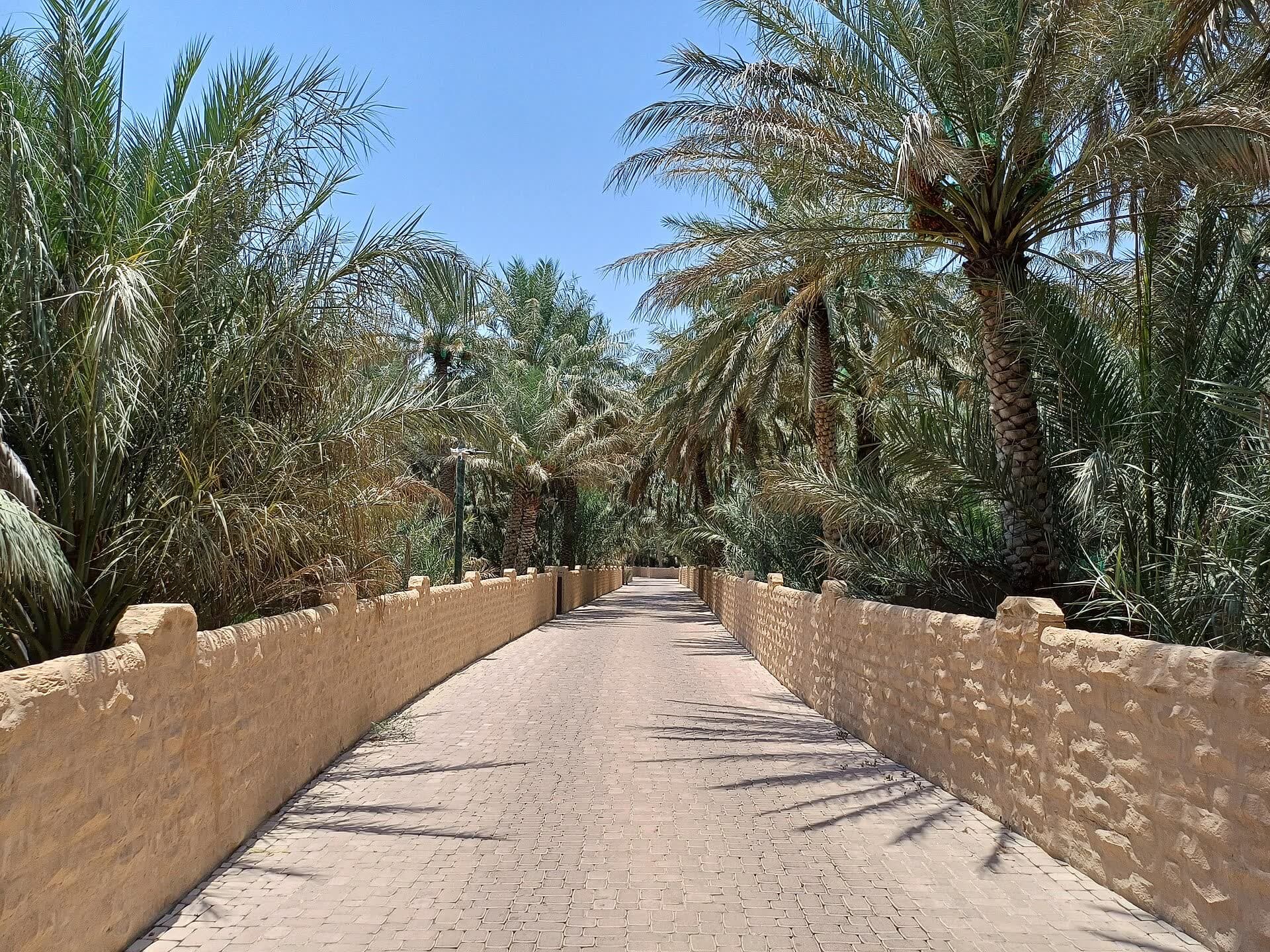
Al Ain Oasis is a historic date-palm landscape in Al Ain, with visitor paths and traditional falaj irrigation channels. Its interest lies in the relationship between water, cultivation and settlement. A walk brings that relationship into view at a gentle scale, with the palms and channels providing a different experience from the UAE's coastal city landmarks.
The city's history follows the irrigation channels.
The oasis is a cultivated landscape rather than simply a decorative garden. Water is part of its organisation, connecting plots and making growth possible in an arid region. The tourism authority identifies the Al Aini and Dawood falaj systems as central to the oasis. Their channels help explain the landscape even when water is not visible in every section.
That seasonal variation matters. An empty channel does not necessarily mean the irrigation story has disappeared; the system can look different at different times. A walk is as much about understanding its arrangement as finding a particular photographic view.
The Eco-Centre offers interpretation of the oasis and its significance, providing a useful companion to time on the paths when accessible. Visitors interested in Al Ain's heritage can connect the agricultural landscape with the city's forts, seeing how water and settlement form related parts of the story.
Planning a visit to Al Ain Oasis
A few hours allows a measured walk, while a shorter visit can still be rewarding. The palms offer shade, but heat remains a consideration, particularly during longer outdoor periods. A compact route in comfortable conditions often gives more pleasure than a long circuit undertaken simply to cover ground.
Permitted visitor paths run through a landscape that includes working and private agricultural plots. Those areas are not automatically open for entry or fruit picking. The channels belong to irrigation, not recreation. Current visitor access and Eco-Centre arrangements come from the site's official information.
Location and arrival
The visitor entrance is the starting point, rather than an arbitrary road beside the oasis. The walking route continues inside, with the return gate providing a clear point of reference. Al Jahili Fort can form another part of an Al Ain heritage day, with a separate transfer and visit. From Dubai or Abu Dhabi city, the journey is substantial enough for the oasis to deserve its own time.
A little more UAE in your inbox.
Weekend places. Neighbourhood notes. A closer look at what is changing.
Questions people ask
Will there always be water in the falaj channels?
Not necessarily. The tourism authority notes that visible water can vary with the season. The channels remain part of the working irrigation landscape even when a particular section appears dry. They are not swimming or recreational water areas.
Opening hours, prices and entry rules change. Confirm with the venue before you set off.