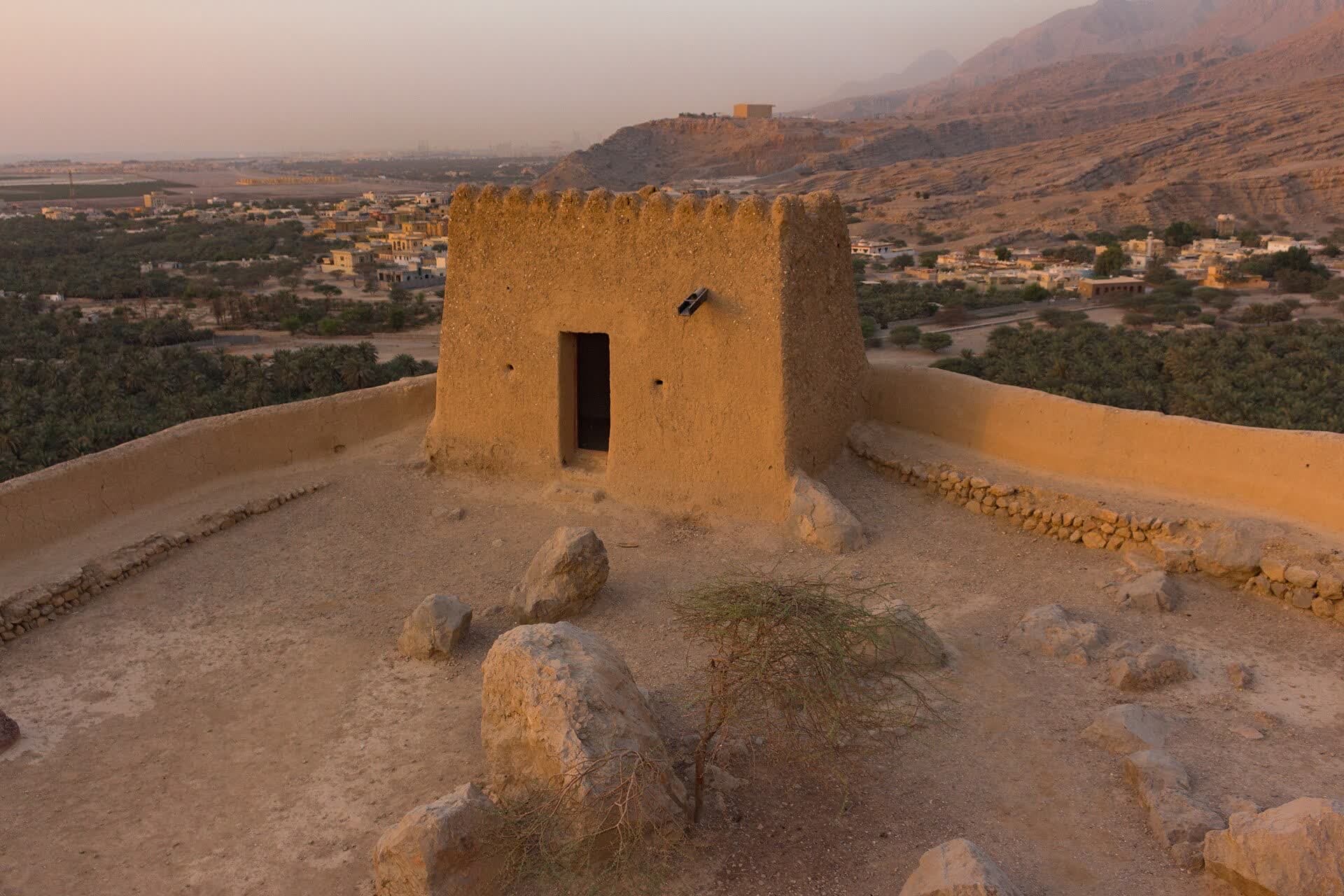
Dhayah Fort is a hilltop heritage site in northern Ras Al Khaimah. Its twin towers overlook palm groves and the surrounding mountains. The final approach is a climb on foot rather than a drive-up viewpoint, making the landscape and the walk as much a part of the visit as the fort itself.
A small fort above a remarkably wide landscape.
From below, the fort can seem like a small detail on a large hill. The view changes during the climb: cultivated ground spreads out beneath it, with the mountains forming a rough backdrop. That relationship between building and landscape is what makes Dhayah memorable. It is a place for a relatively short heritage visit with a substantial view, rather than an extensive indoor museum.
A fortress with a view of its history
The Department of Antiquities and Museums dates the standing mud-brick fortress to the nineteenth century and connects Dhayah with the conflict of 1819. The hill and surrounding area have a much longer history of settlement. Those layers are worth distinguishing: the age of a landscape is not necessarily the age of the building standing on it.
At the top, the placement of the fort becomes easier to understand. The outlook takes in the approach as well as the surrounding cultivated ground. For someone interested in architecture, the visit is less about a long sequence of rooms than about the relationship between a modest defensive structure and the territory around it.
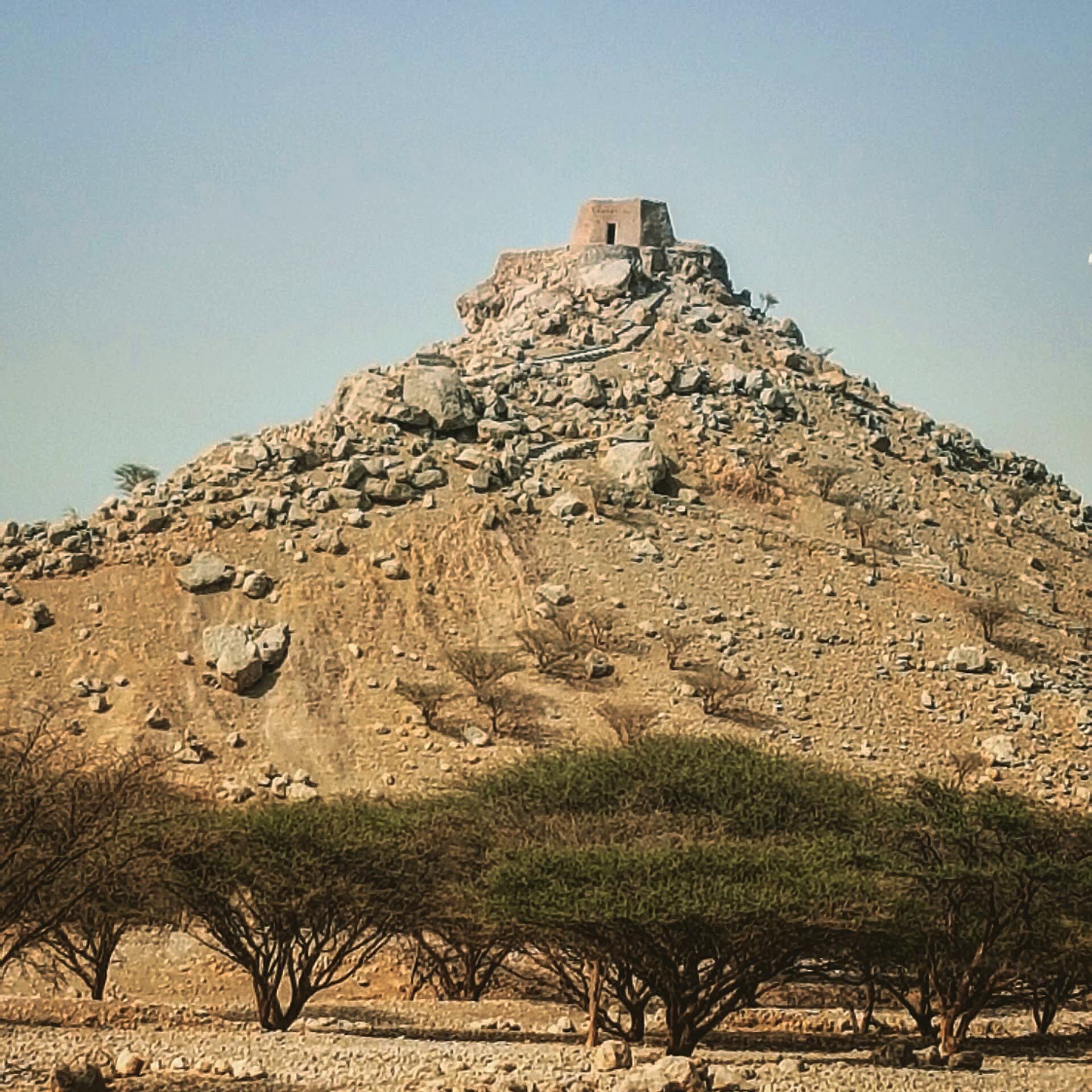
The climb is part of the outing
Arrival at the foot of the hill is only the beginning of the approach. The heritage authority describes uneven steps and a lack of lighting, so this is a daylight visit. The climb is not suitable for wheelchairs or prams. That is an important distinction for families or anyone comparing Dhayah with a monument reached directly from a car park.
The walk also changes the pace of the visit. Light belongings, suitable footwear and a comfortable amount of time make more sense here than arriving immediately before another appointment. Photography is possible from the authorised visitor route without climbing on the historic walls. The view does not require leaving the marked approach.
A heritage afternoon in northern RAK
Dhayah suits visitors who enjoy forts, landscape photography and a short outdoor history stop. From a Ras Al Khaimah base, it can be the main attraction of an afternoon with a meal elsewhere. From Dubai, the travel makes it a more substantial outing even though the fort itself is compact.
Al Jazirah Al Hamra offers a useful contrast for a separate heritage visit: village lanes and former homes rather than a hilltop lookout. Both reveal something of Ras Al Khaimah beyond its resorts, but they occupy different locations and have their own access arrangements. An interest in one does not mean both need to fit into the same afternoon.
A little more UAE in your inbox.
Weekend places. Neighbourhood notes. A closer look at what is changing.
Questions people ask
Can I drive all the way to Dhayah Fort?
No. The hilltop fort is reached on foot from the visitor approach. The steps are part of the visit, not an optional route beside a vehicle entrance.
Is the climb suitable for a pram?
The heritage department describes uneven steps, so the climb is not suitable for prams or wheelchairs. The same route is used for the descent.
How old is the fort?
The standing fortress is dated to the nineteenth century by the local heritage authority. The area's earlier settlement history is a separate part of Dhayah's story.
Opening hours, prices and entry rules change. Confirm with the venue before you set off.