Start with your immigration route and a temporary base, then arrange a UAE phone number, Emirates ID, UAE PASS and banking. Complete your tenancy, Ejari and utilities with the required documents, while organising insurance, school places and a driving licence appropriate to your status.
Tax-free living, a strong sense of safety, a family-friendly environment, education, hospitality and lifestyle. It is easy to see why Dubai appeals to so many people.
But deciding to move and actually getting your life set up are two different things.
This guide brings together what you need to do, and what is useful to know, during your first month in Dubai. It covers the practical foundations, from residency and banking to renting a home, followed by the supermarkets, shopping centres and apps that make everyday life easier.
A quick clarification on "tax-free": Dubai's appeal does not mean every person, company or source of income is exempt from tax. Your circumstances in the UAE and your previous country of residence both matter.
Why I wrote this guide
I moved to Dubai in early 2025. On my first visit, I was overwhelmed by the extraordinary energy of the city. I fell in love with it and quickly decided to move here.
Since then, I have worked at a company providing relocation support and real estate agency services. Alongside navigating my own move, I helped clients relocate, building up practical knowledge on the front line. In May 2026, I started my own business.
What first drew me to Dubai was its energy. What makes living here work is knowing how to get the everyday things done. This guide brings those two sides together.
The following is the guide I would have found useful at the beginning: the steps, the order in which they usually become possible, and the everyday details that are not always obvious when you arrive. Let's get into it.
1. Visit first: explore Dubai before committing
If you have never been to Dubai, why not come for a visit first? A holiday can also be a scouting trip. Alongside the places you want to see, spend time in residential areas, visit supermarkets and try the journeys you would make regularly.
Try to imagine an ordinary Tuesday here, not only a long weekend. Have breakfast in a neighbourhood you are considering. Return in the evening. An attractive apartment and a convenient everyday life are not necessarily the same thing.
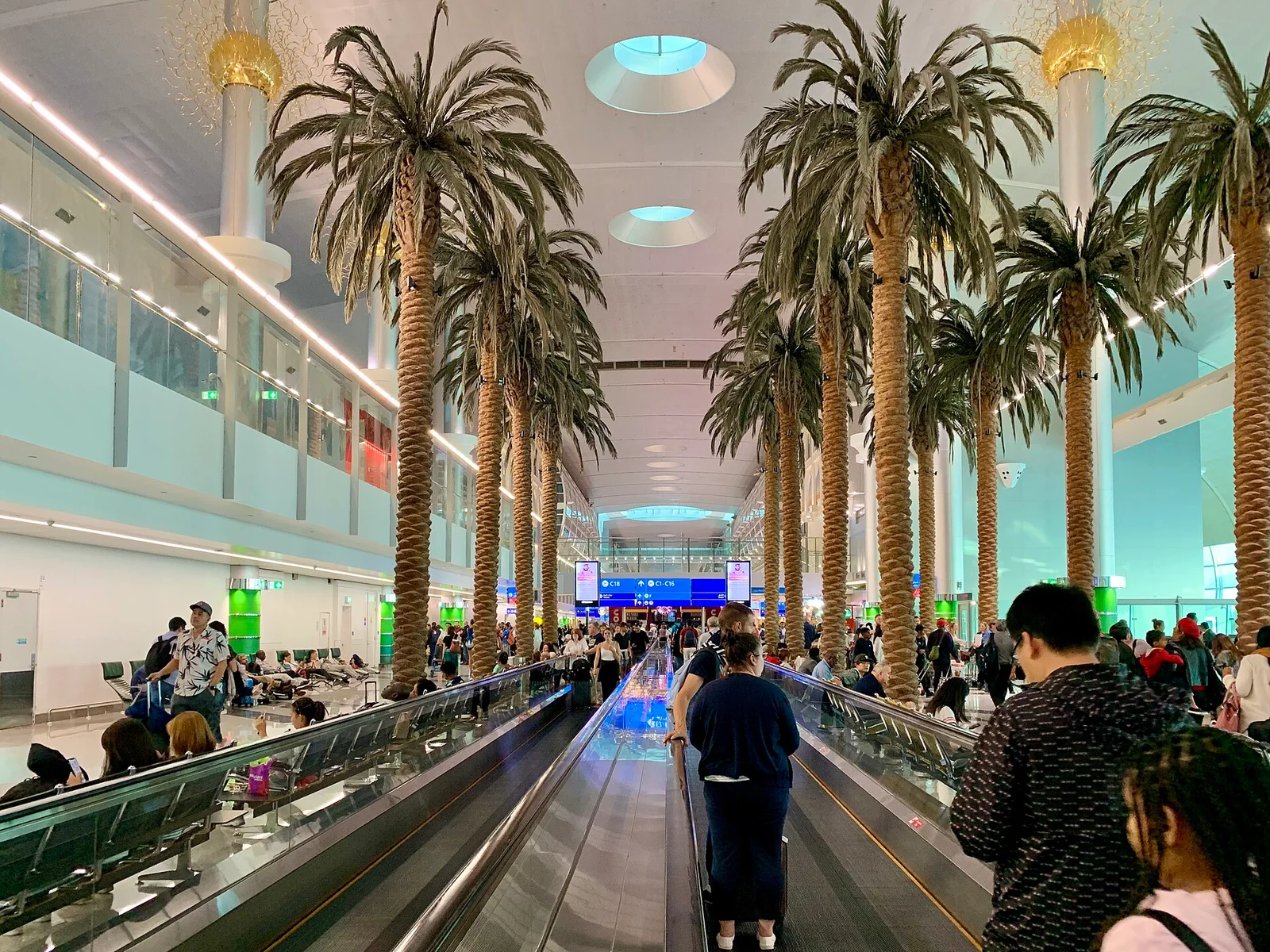
Tourist entry requirements for 20 countries
The table below covers ordinary passports for short visits, using Emirates' official UAE visa information. It does not grant permission to work or live permanently in the UAE. These passport holders do not need advance visa arrangements under the categories listed by Emirates.
The 90-day and 180-day categories are multiple-entry visas valid for six months, with the stated allowance counted in total.
| Passport | Visit allowance |
|---|---|
| United Kingdom (British citizen passport) | 90 days total |
| Russia | 90 days total |
| Australia | 90 days total |
| United States | 90 days total |
| Canada | 90 days total |
| New Zealand | 90 days total |
| France | 90 days total |
| Germany | 90 days total |
| Italy | 90 days total |
| Spain | 90 days total |
| Netherlands | 90 days total |
| Switzerland | 90 days total |
| Sweden | 90 days total |
| Norway | 90 days total |
| Denmark | 90 days total |
| Japan | 90 days total |
| Singapore | 90 days total |
| Ireland | 30 days, free on arrival |
| Malaysia | 30 days, free on arrival |
| Mexico | 180 days total |
The 90-day category does not mean a fresh 90 days every time you land. Previous time in the UAE matters. British citizens should also check the UK's entry guidance, which describes a maximum of 90 days in a 180-day period.
For a visitor, your passport should normally have at least six months' validity at entry. Confirm your exact passport category, remaining allowance and any onward-ticket requirements with your airline before booking. Rules can change, and another passport type or a planned change of immigration status can change the answer.
Use the visit to test everyday life
See the places that excite you, but also test the mundane things: getting groceries, reaching a likely work location, collecting children or simply returning home in traffic. Visit prospective neighbourhoods in daylight and after dark. You are not trying to make every decision on this trip; you are replacing an idea of Dubai with a more personal picture.
2. Residence visas and Emirates ID
Common routes include a 10-year Golden Visa through qualifying property investment, a 5-year retirement residence visa and a company-linked residence visa, often issued for 2 years. The eligibility requirements and costs differ, so choose the route before building your schedule around it.
Dubai Land Department's property-investor Golden Visa service lists a qualifying property purchase value of at least AED 2 million. Mortgage and ownership arrangements need checking against the service requirements. The retirement route has age, work-history and financial conditions; reaching a particular birthday is not enough on its own.
A company-linked visa
People looking for a relatively lightweight company structure often consider free zones such as IFZA and Meydan Free Zone. A company does not need to be a large operation to be useful, and limited initial business activity does not automatically rule out this route. However, little or no revenue does not mean there are no obligations: the licence, permitted activities, records and applicable tax and immigration requirements still need attention.
Meydan describes its investor residence visa as renewable for two years, with an active, compliant company licence. Confirm the actual term and conditions of the package you are buying.
Including company maintenance, visa renewals and professional support, an all-in setup can cost USD 10,000-20,000 a year. That is a possible total budget, not a government minimum or the price of every free-zone package. Lower-cost setups exist, and the scope makes a large difference.
Ask for an itemised quote covering company formation and annual licence renewal, establishment and immigration charges, visa processing, medical examination, Emirates ID, insurance, any office requirement, accounting and tax compliance, professional fees and cancellation costs. Separate first-year charges from recurring annual costs.
Sponsoring your family
Eligible residents can generally sponsor family members. In the usual sequence, the main sponsor receives residence first, then the family's residence applications proceed. Document preparation can happen in parallel, but do not assume that everyone will receive their visa together.
Check marriage and birth certificates, attestation or translation requirements, accommodation evidence and the financial conditions early. The GDRFA family-residence guidance is a useful official starting point.
What the process usually looks like
- While still overseas, contact a specialist, obtain a detailed quote and agree the scope.
- Once satisfied, sign the agreement and make the agreed payment.
- The relevant applications are submitted. Confirm when you are authorised to enter under the intended route.
- After arrival, complete the required medical fitness screening, generally including blood tests and a chest X-ray for adult applicants, and biometrics where required.
- Receive your residence approval and Emirates ID, checking the details and expiry dates.
In a straightforward case, the final in-country stages may take around 7-10 days. That is not a guarantee for the whole move: company approvals, appointments, additional checks and card delivery may add time. DLD separately quotes 7-10 working days for its property-investor service once its requirements are met.
Why Emirates ID matters so much
Your Emirates ID, usually shortened to EID, becomes your everyday identity document. You will encounter it when renting a home, registering a mobile number, arranging utilities, using government services and opening bank accounts. Your residence permit and Emirates ID are related but distinct documents; keep access to both.
Prepare a secure document folder with passport and immigration copies, company documents where relevant, family certificates, bank statements and evidence of where your funds come from. Bring originals when required. Check translations and attestations before leaving your home country rather than discovering a missing document at an appointment.
For questions about the process, get in touch on WhatsApp. I can also introduce you to specialist providers.
3. Choose your initial base and explore where to live
Many people stay in a hotel, serviced apartment or Airbnb while their residency is being processed and they explore rental areas. Completing a conventional long-term rental is usually simpler once your residence documents, EID, local number and banking are ready. This is not a blanket ban on all accommodation arrangements before residency: short stays and different tenancy arrangements have different requirements.
Before paying a deposit, ask exactly what you need for the tenancy, Ejari and utility activation. A temporary base gives you breathing room instead of forcing an expensive decision during your first few days.
Some areas to start with
DAMAC Hills, Arjan and Jumeirah Village Circle (JVC) are useful places to explore for residential living and, depending on the property, more space or value than the most central locations. Compare buildings carefully. DAMAC Hills and DAMAC Hills 2 are different communities, so check which one a listing means.
Al Barsha, Meydan and Barsha Heights, formerly TECOM, are also worth investigating. They are not interchangeable: street layout, road access and the character of individual buildings vary. Meydan is a broad area, so test the actual journey from the property rather than relying on the district name.
Dubai Hills Estate is a popular residential choice at a somewhat higher budget. Apartments, townhouses and villas offer different versions of life there, and proximity to a park or mall on a map does not tell you the door-to-door journey.
Downtown Dubai, Dubai Marina and Business Bay offer a more central, urban experience, with business, tourism, restaurants and a glamorous city setting. The trade-offs can include traffic, building access, available space and price.
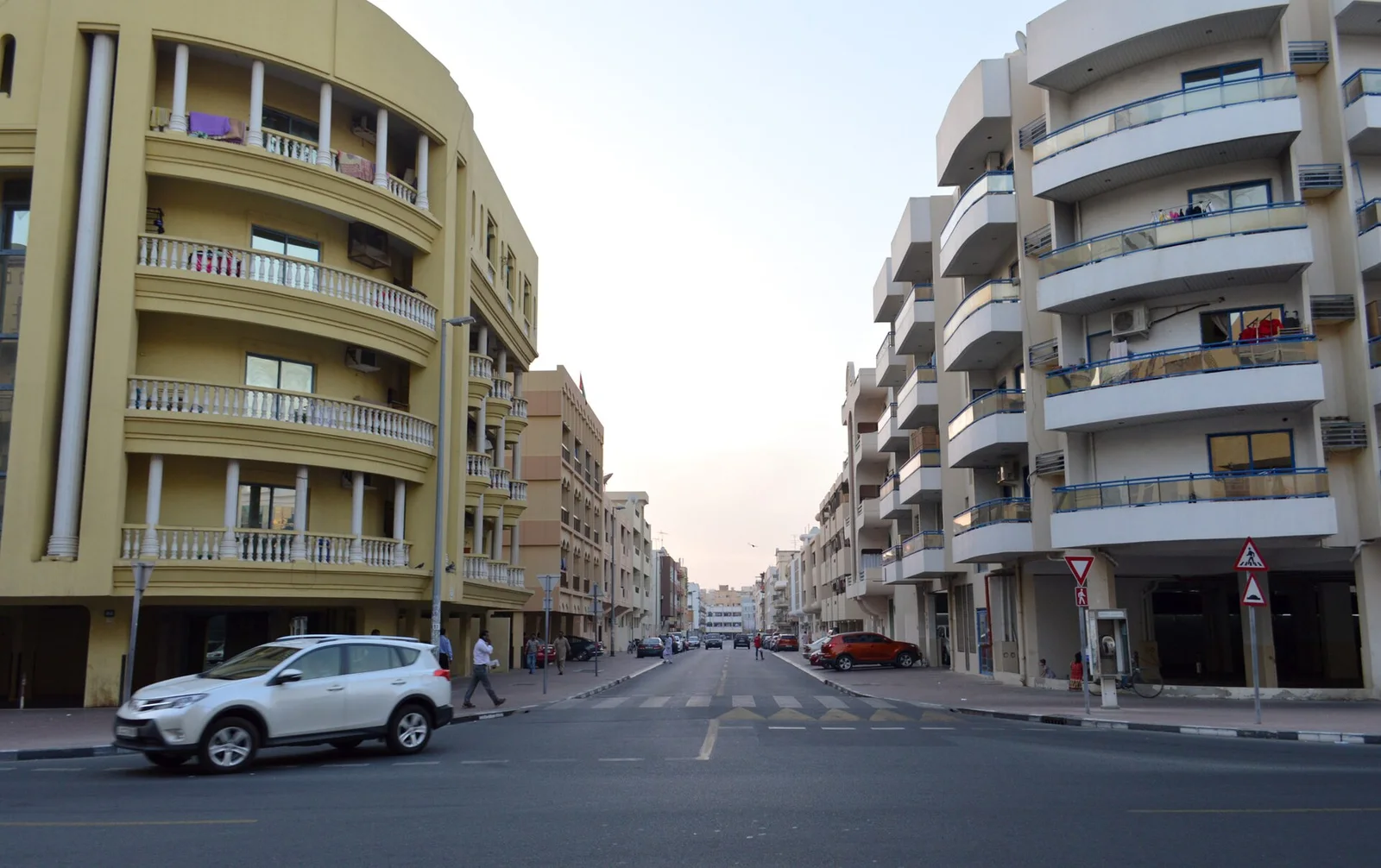
At a pace that suits your energy, visit a different area every few days. Try to build a picture of your life there. Include the journeys to work, school, groceries, the gym and friends, not just the first impression of the lobby.
Look at parking and busy-hour access, lift waits, maintenance, nearby construction, air conditioning, internet options, noise and whether a supposedly walkable errand would still be comfortable in summer.
Choose a home for the week you will live, not only the view from the balcony. Our Dubai neighbourhood guide and property-viewing guide can help organise that search.
4. Get a UAE phone number
I recommend getting a visitor mobile plan when you arrive. A UAE number is useful much earlier than you might expect: visa-related applications and many everyday services ask for one.
du and e& (Etisalat) are the two main operators. Both have visitor options for people without Emirates ID. Bring your passport and entry documents to an official store, or use an eligible official digital registration route.
Packages around 28 days are available, alongside shorter options; du lists 7-, 14- and 28-day tourist bundles. A bundle's validity and the underlying SIM registration validity are not necessarily the same thing. Renewals depend on the operator and your immigration status. Recharging does not automatically extend the SIM's registration.
Once your EID is issued, update the registration and move to a resident plan. Ask to keep the same number; this is usually possible through the operator's migration process. e&'s visitor-line terms describe switching once you have Emirates ID.
Keep control of this number: it will be connected to banking, government services and one-time passwords. Keep your overseas number working until important accounts there have been updated too.
5. Set up UAE PASS and open a bank account
UAE PASS
With your resident documents and number ready, set up UAE PASS. This is the national digital identity used to access government and participating private-sector services and sign documents electronically. Visitor access is not the same as having access to every resident service.
Read each authentication or signing request before approving it. Treat your UAE PASS credentials and approvals with the same care as access to your bank account.
Choose a bank, then order the things you will need
There are many options, including First Abu Dhabi Bank (FAB), Emirates NBD and Mashreq. The bank I personally use is Wio Personal.
Wio is a digital bank rather than a conventional branch-based service, and I find its smartphone app very easy to use. Once your account is opened, order your debit card and, if your account is eligible, a chequebook early so they can be delivered. Credit facilities and chequebooks are not automatically available to every customer.
I use Wio Personal and really like how easy the app is to handle. My practical advice is to order your card and chequebook early, rather than discovering you need them when you are ready to sign a lease.
Expect identity and financial checks. Depending on the bank and your circumstances, you may need your passport, EID, address evidence, company or income documents and bank statements. Have a clear trail for money from a business, investments, a property sale or an overseas account.
Keep personal and business banking separate. A convenient personal account does not replace an appropriate company account or its compliance requirements.
6. Rent a home and activate utilities
Once you have the necessary documents, local number and banking arrangements, you can complete your home search. You can, of course, begin browsing and viewing earlier. Property Finder and Bayut are the main portals to start with: choose Rent and shortlist the properties that fit your area and budget.
Annual rent and post-dated cheques
Many Dubai rentals use an annual contract. Some landlords ask for the annual rent in one upfront cheque; others accept several post-dated cheques over the year. The payment schedule is negotiable and can affect the price. An annual contract paid in several cheques is not the same as a flexible monthly tenancy.
Monthly arrangements also exist, particularly for furnished accommodation and serviced stays. Check what is included and which contract you are signing.
Contact the agent through the portal, confirm availability and arrange a viewing. If you decide to proceed, the usual payments include a security deposit, often around 5-10% of annual rent, the agreed rent payment and an agency commission commonly around 5%. Minimum commissions, VAT and negotiated terms may change the total; these percentages are common market conventions, not a universal government tariff.
Verify the agent, the owner's identity or authorised representative, the property and the intended payee before transferring money. Read the tenancy addendum, including maintenance responsibilities, renewal provisions and early termination terms.
Ejari, DEWA, cooling and gas
Register the tenancy in Ejari, Dubai's official rental registration system. Agree who will submit it and make sure you receive the certificate.
DEWA provides electricity and water. Its move-in process is integrated with Ejari, but you still need to complete the activation and payments. DEWA lists a refundable security deposit of AED 2,000 for an apartment or AED 4,000 for a villa, plus activation charges.
Gas and air conditioning can require separate arrangements. Ask whether cooling is included in the rent, billed through your electricity account or charged by a separate cooling provider. "Chiller-free" should be confirmed in the actual agreement, not assumed from a listing.
Arrange home internet and ask building management about move-in permits, delivery access and service-lift bookings. These are small details until a moving van is waiting outside.
Budget for the first payment, not just the advertised rent
As an illustration, on an annual rent of AED 200,000, a 5% deposit is AED 10,000 and a 5% commission is another AED 10,000 before any applicable VAT. Add your first rent instalment, Ejari, utility deposits, activation and any furniture or moving costs. This example explains the arithmetic, not an average Dubai rent.
Keep refundable deposits, one-off fees and ongoing bills separate in your budget. Record the dates and values of every post-dated cheque so your account is funded in time.
Before accepting the keys
Photograph existing damage and check the air conditioning, water pressure, appliances, keys, access cards and allocated parking. Get a clear contact for repairs and put unresolved issues in writing.
Doing all of this alone can be stressful, especially when a small misunderstanding interrupts the move. A good relocation agent can coordinate the steps. If you would like an introduction to a provider I trust, get in touch on WhatsApp.
That covers the foundations. Now for the supermarkets, shopping centres and everyday services that make the city easier to live in.
7. Supermarkets
Waitrose and Spinneys
Waitrose and Spinneys are popular with many European residents. You will find them in shopping centres and neighbourhood locations, including standalone stores.
The two are connected locally: the Spinneys group operates Waitrose stores in the UAE under a licensing arrangement. That is not the same as saying both brands have the same owner worldwide. The group's official company information explains the relationship.
Many branches have a separate non-Muslim section selling pork, which is less widely available in ordinary grocery aisles in Dubai. Check the individual branch rather than assuming every store has the same range.
I also really like the prepared food. Salads and other dishes are sold by weight, and a whole roast chicken can make an easy dinner when you are still getting settled. As a rough guide from my own shopping, some deli items have started around USD 1 per 100g, and a whole chicken can be under USD 10. Those are personal price references, not a promise of today's price at every counter.
Carrefour, LuLu and VIVA
Carrefour, LuLu Supermarket and LuLu Hypermarket, and VIVA are other names worth knowing. Different formats serve different needs, from a large weekly shop to everyday value purchases.
Stores can be on the ground floor of a residential building, in a small community centre or inside a major mall. During your first week, find the grocery store that is easiest from home. You can explore the larger and more specialised choices once the basics are working.
8. Shopping malls and community centres
Dubai's malls are not only about fashion. They are also practical places for groceries, pharmacies, phone shops, cafés, food and errands. The most useful one is not always the largest.
Dubai Mall
Dubai Mall is the huge Downtown destination beside the Burj Khalifa. It combines shopping, restaurants and major attractions, so it works well as an outing. It is not necessarily the quickest choice for a single errand.

Mall of the Emirates (MOE)
Mall of the Emirates in Al Barsha is another major shopping and dining destination, known internationally for Ski Dubai. For many residents, its everyday shopping and services matter just as much as the indoor snow.

Dubai Marina Mall
Dubai Marina Mall is a more manageable waterfront mall. It is useful for residents around Marina who want shops, food and a connection to the promenade without turning the visit into a full-day expedition.

Dubai Hills Mall
Dubai Hills Mall brings together shopping, dining and entertainment and is an important destination for nearby residential communities. Our Dubai Hills Mall guide goes into more detail about planning a visit.
DAMAC Mall
DAMAC Mall in DAMAC Hills is more of a neighbourhood shopping and services stop. It is useful to know if you are considering the community, but it is not on the scale of Dubai Mall.
City Centre malls
City Centre is a family of malls, not one location. City Centre Mirdif and City Centre Deira are two prominent examples, serving different parts of the city. Check which branch someone means before setting off.
The smaller community centres
A community centre is essentially a smaller neighbourhood mall, usually oriented around daily life: a supermarket, hair salon, cafés, pharmacies and other useful services. There are many across Dubai. Visiting the one nearest a prospective home can tell you more about daily convenience than a tour of the city's biggest malls.
9. Useful apps
Careem: the everyday super-app
Careem is one of the most useful apps to install in Dubai. Depending on your location, you can book taxis and rides, order food, groceries and household essentials, and arrange services such as cleaning.
From toothpaste and towels to dinner or a ride across town, it puts a remarkable amount of everyday life in one app. It feels as though practically everyone around me uses it. I certainly find it extremely convenient.
Talabat, noon and Keeta
For food delivery, Talabat, noon and Keeta are alternatives worth comparing. Availability, restaurants, fees and promotions vary by address.
noon Minutes is particularly useful for rapid delivery of groceries and household items, sometimes in around 15 minutes. The actual estimate depends on where you are and what you order.
When my shower head and hose broke, I checked noon Minutes almost on a whim. They had replacements, and the order arrived in about 15 minutes. I was genuinely impressed: it solved a small but very real household problem almost immediately.
Property Finder and Bayut
As mentioned earlier, both portals cover rental and sale properties. It is worth looking at both, because some properties appear on only one. Treat the listing as the start of the enquiry: confirm availability, the exact unit and the payment terms directly with the authorised agent.
WhatsApp is widely used around the world and especially central to everyday communication here. Agents, service providers and many businesses use it. If you do not already have it, set it up after obtaining a phone number.
If you already use it overseas, decide whether to retain that account or use its change-number process. Enable two-step verification and never share registration codes, even with someone claiming to be a service provider.
UAE PASS
This is worth mentioning again because you will keep encountering it. Linked to your verified identity, UAE PASS supports government services and participating companies, including parts of telecom registration. It is an important part of your digital life here, not just an app for the visa process.
Parkin
Parkin is useful for paying for Dubai's public paid parking. Parkin operates the public-parking concession associated with RTA; it is not a universal payment system for every private car park.
Check the parking zone, plate details, tariff and paid hours before confirming. A saved number plate is helpful, but it is also easy to select the wrong vehicle after changing rental cars.
Wio Personal
This is the app for the bank I use. I find everyday banking, the debit card and eligible credit-card facilities very convenient.
One limitation I previously associated with Wio was obtaining a manager's cheque for a property purchase. My understanding is that this has recently become available, but confirm the current service, eligibility, limits and collection arrangements directly with Wio before relying on it for a transaction. I have not independently confirmed those details in its public documentation.
For ordinary daily banking, it covers much of what I need. Even so, keeping a backup payment method is sensible.
Waze
Waze is a navigation app focused on driving. I find it easier to follow as a car navigator than Google Maps, and it is widely used among people I know here. Set your destination before moving, follow road signs and never make a sudden manoeuvre to rescue a missed exit.
Laundryheap and Washmen
Laundryheap and Washmen collect and return laundry. Put your clothes in the appropriate bag and arrange collection from your door or reception, following the provider's instructions.
I prefer Laundryheap because I have found the return quicker. It advertises turnaround as quick as 24 hours. Washmen's help page describes a standard 48-hour turnaround, with an express option. Same-day or next-day return is not guaranteed for every item, service or booking. Choose wash-and-fold, pressing or dry cleaning appropriately for the garment.
Luma: finding people, not just services
Luma is an event platform I have been paying attention to. It seems especially popular in the founder circles I encounter, with entrepreneurial events and communities organised around activities such as exercise.
I cannot claim that everyone in Dubai uses it, but it looks promising for creating real-world connections. Look for an event that matches a genuine interest rather than treating every gathering as another administrative task.
Wise and Revolut: check what your residence allows
Wise and Revolut can be useful for international money movement where your account and residence are supported. Verification is increasingly important, and a review can temporarily restrict features.
Having two eligible transfer or banking routes can be useful when one is unavailable. However, do not assume you can open or keep every feature simply because you used it before moving. Wise's balance-holding eligibility list and Revolut's supported-country list did not list the UAE for those services when checked. Transfer availability, existing accounts and a future local launch are separate questions.
Update providers with your real address and tax-residence information. Keep source-of-funds documents ready, and arrange a compliant backup rather than relying on an outdated overseas address.
Mifto: when you need a rental car
Mifto is our rental-car discovery platform. Taxis can be affordable for occasional trips, but using them every day is different. Having a car of your own to use can make everyday journeys easier.
Whether you need a car for a sightseeing trip or for the months before buying one, get in touch on WhatsApp and we can help you explore rental options. Our UAE Journal also suggests places to go, from restaurants and malls to beaches and mountain trips.
10. Arrange health insurance before you need it
Health insurance belongs on the first-month checklist, not on the list of things to think about later. Dubai requires health insurance for residents; see the official Dubai health-insurance guidance. Check when visitor travel cover ends and resident cover starts so you do not create a gap.
Names to include in your enquiries are Orient Insurance, Sukoon, ADNIC and RAK Insurance. These links take you to the insurers' own sites. Ask for a policy suitable for your visa, emirate and household rather than assuming every plan from a familiar insurer provides the same cover.
Compare the hospital and clinic network, not only the premium. Check outpatient appointments, specialist referrals, co-payments, deductibles, annual limits, pre-existing conditions, maternity, dental and optical benefits, overseas cover and whether treatment is directly billed or reimbursed later.
The cheapest compliant policy and the best fit for your family may be different things. Save your policy details somewhere accessible and identify a nearby clinic in the actual network before you need an appointment.
11. If you have children, think about schools before the lease
A school or nursery journey can shape the whole household's routine. Shortlist education options alongside neighbourhoods, rather than signing a lease first and discovering the school run later.
Check the curriculum, year-group placement, available places, admission process, support needs, learning environment and journey at the actual morning drop-off time. Availability should be confirmed before making a housing decision around one school.
KHDA's school directory and school fee fact sheets are useful starting points. Look beyond tuition to transport, uniforms, activities and other required or optional costs.
A nursery on my radar: Ladybird Nursery Al Barsha
A friend of mine uses Ladybird Nursery Al Barsha. It is not cheap, but the environment seems very good for the price. It is somewhere I would put on the shortlist and visit, rather than choosing a nursery from a price list alone.
Ladybird Nursery Al Barsha describes a British EYFS curriculum in a Montessori setting, with purpose-built facilities in Al Barsha 3. The recommendation above comes through my friend's experience, not from having my own child enrolled there. Book a tour, ask about your child's age group and current availability, and request fees for the hours and days you actually need.
The right school or nursery is not automatically the nearest or the most expensive. It should fit your child and the life your family will actually lead here.
12. Check your driving licence as your status changes
As a visitor
Before travelling, check whether you need an International Driving Permit (IDP) issued in your home country, together with your valid original national driving licence. The IDP is not a standalone licence. Some recognised national licences can be used by eligible visitors without an IDP; the answer depends on your licence, nationality and the vehicle arrangement.
Confirm acceptance with the rental company and insurer before driving. The RTA licence service and FAQs and RTA driving handbook are better starting points than assuming a friend's experience applies to your passport.
When you become a resident
Once you become a UAE resident, arrange the appropriate UAE driving licence. Do not continue relying on visitor permissions. Depending on the issuing country and the applicable nationality requirements, you may qualify to exchange a foreign licence rather than start lessons from scratch.
For eligible licences, the process can involve a required translation, an approved eye test, your original licence and Emirates ID, followed by an RTA application or visit to an eligible Customer Happiness Centre. For some countries, an embassy or consulate can provide the required translation; confirm the accepted format for your country before paying for one. RTA's country-by-country table identifies where a legalised translation or other conditions apply.
An eligible exchange is roughly an AED 1,000 process: RTA lists a standard total of AED 1,050 including the specified eye test and fees. Translation, additional requirements or different categories can change your total. Use the current RTA service page for your case.
If you need driving lessons
Learning and testing can cost considerably more. AED 4,000-20,000 is a broad planning range, not a fixed tariff or a ceiling. Experience, required training hours, scheduling, retests and the package matter. Premium programmes can exceed AED 20,000: Emirates Driving Institute's Platinum course currently lists beginner packages above that level.
Ask whether the quote includes eye testing, RTA charges, VAT, additional lessons and repeat tests. A low starting price and a fixed-price-until-pass package are not directly comparable.
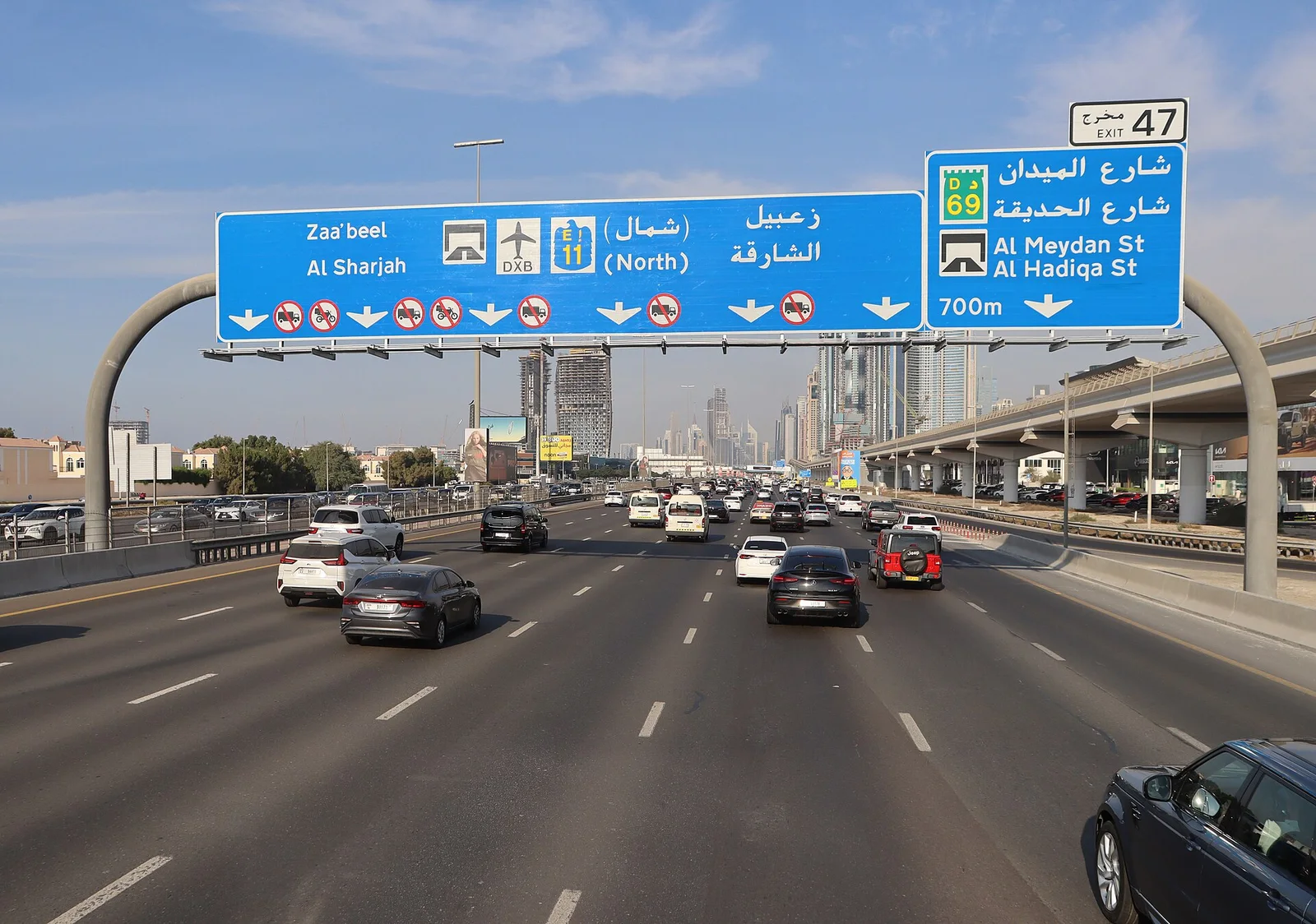
Everyday road rules worth taking seriously
- Traffic keeps right. The left lane is for overtaking; move out safely after passing and do not tailgate.
- Follow the posted speed limit. You may hear about a 20 km/h radar buffer in Dubai. A camera enforcement threshold is not a blanket permission to exceed the sign, and you must not carry that assumption into another emirate. Abu Dhabi removed its speed buffer in 2018. Road-specific and temporary restrictions matter.
- Speed cameras are common, and fines can follow. Obey traffic lights, including lane-specific signals, and learn the priority and lane rules for roundabouts before using them.
- Watch for pedestrians stepping into the road, including away from crossings. Anticipate unexpected behaviour and give yourself time to stop.
- Occasional checkpoints may involve identity checks. Carry your driving licence and Emirates ID, not just one of the two.
For official guidance, consult the RTA handbook, Dubai Police street-speed information and Abu Dhabi's speed-management guidelines. Avoid treating a navigation app or somebody else's tolerated speed as the road rule.
For a rental, also check insurance excess, mileage limits, the deposit, toll and parking charges, authorised drivers and the accident-report procedure. Good preparation makes driving more relaxed; the priority is getting everyone home safely.
Your first-month check
Not everything has to be finished in exactly 30 days. The useful test is whether the foundations are in place and you know who is handling anything still outstanding.
- Your immigration status and upcoming deadlines are clear.
- Your Emirates ID and residence documents are accessible.
- Your UAE number is active and registered correctly.
- UAE PASS is set up and secured.
- Your bank account, cards and any required chequebook are ready.
- You have a backup payment method and a clear transfer trail.
- Your tenancy, Ejari and handover are documented.
- Electricity, water, cooling, gas where applicable, internet and building access work.
- You have recorded rent payment dates and amounts.
- Health insurance covers the people who need it.
- School or nursery arrangements are progressing if relevant.
- Your driving entitlement matches your resident or visitor status.
- You know your local supermarket and have the apps you will actually use.
- You have made room for routines and people beyond the paperwork.
Keep passwords and one-time codes private, and read digital approvals before accepting them. Save emergency numbers too: 999 for police and 998 for an ambulance, as listed in the UAE emergency guidance.
Welcome to life in Dubai
There is a lot of administration at the beginning, but it has a purpose: a legal base, a home, a working bank account, utilities and the services that make ordinary life comfortable. Once those are in place, you can spend more time enjoying the city that made you want to move in the first place.
I hope this guide makes your first month easier. If anything is unclear, get in touch on WhatsApp. I can help you think through the next step or connect you with an appropriate specialist.
Official links appear beside the relevant information. Entry rules, eligibility, fees and product availability were checked for this draft on 18 September 2026; confirm them again before applying or paying. My own experiences are identified in the text, while the Ladybird recommendation is based on a friend's use of the nursery. This guide is practical orientation, not individual immigration, insurance, tax or legal advice.
Cover: Dubai Marina Panorama by @ferd1graphy, CC BY-SA 3.0, resized and display-cropped. Other photographs and their licences are credited beneath each image. Archive photographs illustrate their named places, not current property availability or the author's personal visits.