Ras Al Khor Wildlife Sanctuary is a protected wetland in Dubai, where mangroves, mudflats and open water support resident and migrating birds. Flamingos are its best-known inhabitants, but the landscape is the larger attraction. Anyone planning a visit should first confirm which viewing hide is operating with Dubai Municipality.
Mangroves and pale wings at the city's waterline.
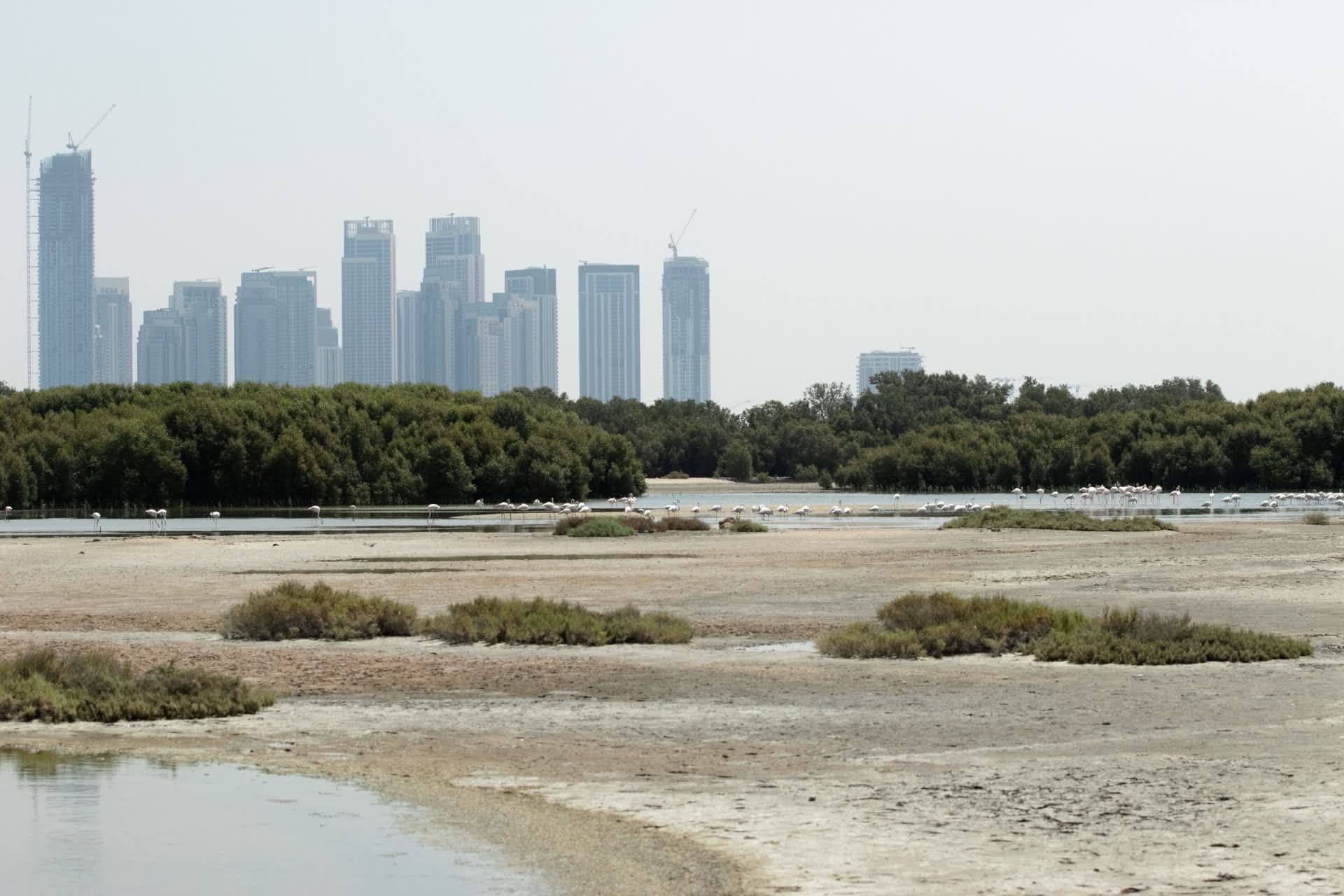
The sanctuary presents a different scale of Dubai. In its archive photographs, towers rise behind a low band of mangroves, with shallow water and pale ground stretching across the foreground. The interest lies in that meeting of a large city and a living wetland. It invites the eye to slow down, moving from the skyline to the smaller shapes along the water.
This is a place for observation rather than a packed programme. A patient visitor may find as much interest in the arrangement of the habitat as in an individual bird. An hour is a reasonable personal allowance for a short hide visit once access is confirmed, rather than an official visit duration.
More than a flamingo photograph
Dubai Municipality identifies mangroves, intertidal areas, mudflats and sabkhas, or salt flats, among the sanctuary's habitats. Its Ramsar designation in 2007 recognised the wetland's international importance. These are useful clues to its character: water and ground form a varied environment within an otherwise intensely urban setting.
The municipality's wildlife account includes ducks, waders and other waterbirds alongside flamingos, with winter bringing migrating birds. Their distribution and visibility vary, so neither a particular species nor a close view is assured. Binoculars help a visitor look without approaching wildlife. For children who enjoy noticing small details, that can become the outing's focus: a shape in the distance, a reflection, or a bird moving between water and land.
The published visiting arrangements
The municipality's planning page lists summer hours, April to September, as 6am to 6pm, and winter hours, October to March, as 7:30am to 5:30pm. These are the published seasonal hours, not proof that every hide is open on a particular day. The separately listed Mangrove Hide closure matters when choosing an arrival point.
A hide is a quiet viewing space. The visitor guidance prohibits food, drinks, pets and smoking inside, and asks visitors to stay within permitted areas. A meal belongs elsewhere in the day's plans; refreshments and breaks should follow staff directions outside the hide. The experience suits people content to watch at the wetland's pace.
Booking, identity checks and fees
Visit Dubai, the city's official tourism guide, describes the bird hides as free to use and says individuals and families do not need advance booking. Dubai Municipality's service conditions still require check-in with official identification; no NOC is needed for those visitors.
Schools, universities and tour companies have advance arrangements through the municipal portal, while commercial filming is a separate permission category. The published free-use arrangement does not establish that a particular hide is operating: 800900 is the municipality's contact for checking access before setting out.
Finding the right arrival point
Dubai Municipality provides separate map links for the hides. Its Flamingo Hide reference is Makani 29772 87328, while Lagoon Hide is 30487 87923. These identify different locations, not an invitation to move freely between them through the protected habitat. The confirmed operating hide should be the destination used for a taxi or driving route.
Parking is restricted to designated areas. A map pin alone does not confirm an open entrance, parking availability or a suitable walking approach. Dubai Creek Harbour is a separate waterfront destination; reaching its promenade does not provide sanctuary admission. Keeping those visits distinct leaves a clearer, less hurried day.
A landscape being restored
A Dubai Municipality announcement dated 30 June 2025 set out a two-phase development programme. It targeted completion of the first, habitat-focused phase by the end of 2026. Visitor buildings, viewing towers and walking and cycling routes belong to the later phase described in that announcement. They are future plans, not facilities this guide promises are available today. The conservation work helps explain why the sanctuary deserves attention beyond a single photograph.
- Dubai Municipality: sanctuary habitats and wildlife
- Dubai Municipality: seasonal hours and visitor guidance
- Dubai Municipality: hide notices, booking and location
- Dubai Municipality: natural-reserve NOC conditions and fees
- Dubai Municipality: visiting enquiries
- Visit Dubai: free bird hides and individual/family visits
- Dubai Municipality: development announcement, 30 June 2025 (Arabic)
A little more UAE in your inbox.
Weekend places. Neighbourhood notes. A closer look at what is changing.
Opening hours, prices and entry rules change. Confirm with the venue before you set off.